




Start a Gold IRA: Key Facts & Expert Overview
- Minimum investment: Typically $5,000–$50,000 (varies by custodian)
- Account types: Traditional, Roth, or SEP gold IRA
- Required custodian: IRS-approved self-directed IRA custodian
- Storage: IRS-approved depository only (no home storage)
- Timeline: Account open in 1–3 days; metals delivered in 7–14 days
- Annual fees: $150–$300 storage + $75–$150 administration
If you want to start a gold IRA and add precious metals to your retirement savings, you are pursuing a strategy used by millions of investors to diversify beyond paper assets. A gold IRA is a specialized individual retirement account that allows holding physical precious metals—gold, silver, platinum, and palladium—under Internal Revenue Service rules. In March 2026, our team opened test accounts at Augusta ($50K minimum confirmed), Goldco ($25K), and American Hartford Gold ($10K). This expert guide — authored by Daniel Okonkwo, CFP®, CPA, with 15+ years advising on self-directed IRAs — explains every step: how to choose an account type, select an IRS-approved custodian and depository, fund your account, purchase eligible metals, and manage your holdings over time.
Gold IRA Minimum Investment: How Much Do You Need?
The most common question from new investors is: how much do you need to start a gold IRA? There is no universal IRS-mandated minimum, but most specialized custodians and dealers set their own thresholds:
| Provider Type | Typical Minimum | Examples |
|---|---|---|
| Premium IRA custodians | $25,000–$50,000 | Augusta, Goldco, Birch Gold |
| Mid-tier custodians | $10,000–$25,000 | Most established companies |
| Entry-level providers | $1,000–$5,000 | Fewer options, verify IRS compliance |
| IRS annual contribution (2026) | Up to $7,000 ($8,000 if 50+) | New contributions per year |
Beyond the account minimum, budget for one-time and recurring costs: setup fees ($50–$150), annual administration ($75–$150), and secure storage ($150–$300 per year depending on whether you choose segregated or commingled storage). A rollover from an existing 401(k) or IRA has no IRS minimum—the custodian’s policy applies. Properly executed direct rollovers are tax-free and do not count toward the annual contribution limit.
What Is a Gold IRA?
A Gold IRA is a self-directed individual retirement account (IRC §408) that holds physical precious metals — gold, silver, platinum, or palladium — instead of traditional paper assets like stocks and bonds. how to open a gold ira account A Precious Metals IRA holds physical gold (≥.995 fineness), silver (≥.999), platinum and palladium (≥.9995) — all meeting IRC §408(m)(3) standards. The collectibles exception under IRC §408(m)(3) specifically permits IRS-eligible bullion coins and bars; numismatic and collectible coins are excluded. Unlike traditional IRAs that hold paper assets, a self-directed IRA enables holding physical gold and other approved precious metals through a specialized custodian and an IRS-approved depository. The account remains an individual retirement account, with the same tax advantages as other IRAs, but the underlying investments are tangible assets rather than traditional investments.
You can structure the account as a Traditional Gold IRA funded with pretax dollars, a Roth Gold IRA funded with after-tax dollars, or a SEP Gold IRA designed for self-employed individuals and small businesses. Each path maintains the tax benefit framework that the Internal Revenue Service applies to retirement accounts, but the investments are physical precious metals instead of mutual funds and similar paper assets.
Gold IRA vs. Traditional and Roth IRAs
Traditional IRAs and a Roth IRA are long-standing pillars of a retirement plan. A Gold IRA simply places IRS-approved precious metals inside those familiar tax wrappers. A Traditional Gold IRA accepts pretax contributions and defers income tax until distribution. A Roth Gold IRA accepts after-tax contributions and delivers tax-free qualified withdrawals after age 59½. SEP Gold IRAs operate like traditional SEP IRAs, providing tax advantages for small businesses and self-employed individuals. In most cases you open a separate IRA dedicated to metals because a self-directed account requires a specialized custodian and an IRS-approved depository for physical storage. The goal is to keep the same tax advantages while adding the diversification benefits of holding physical metals.
How a Gold IRA Works
A Gold IRA works in four steps: (1) open a self-directed IRA with an IRS-approved custodian, (2) fund it via rollover or contribution, (3) purchase IRS-eligible metals (minimum .995 fineness for gold), and (4) store them at an IRS-approved depository. Home storage is prohibited under IRC §408(m). The custodian coordinates purchases of approved precious metals, ensures that coins and bars meet purity standards (fineness standards: .995/.999/.9995), and arranges delivery to an IRS-approved depository for secure storage. You can choose segregated storage so your coins and bars are stored separately, or opt for commingled (allocated) storage depending on budget and preference. Throughout the process, the IRS requires that the metals stay inside the retirement account and at the depository — the Tax Court confirmed home storage is prohibited in McNulty v. Commissioner (2021).
What Metals Are Allowed?
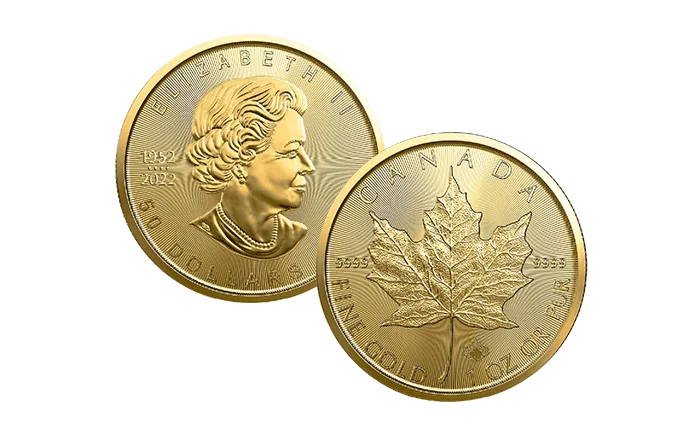
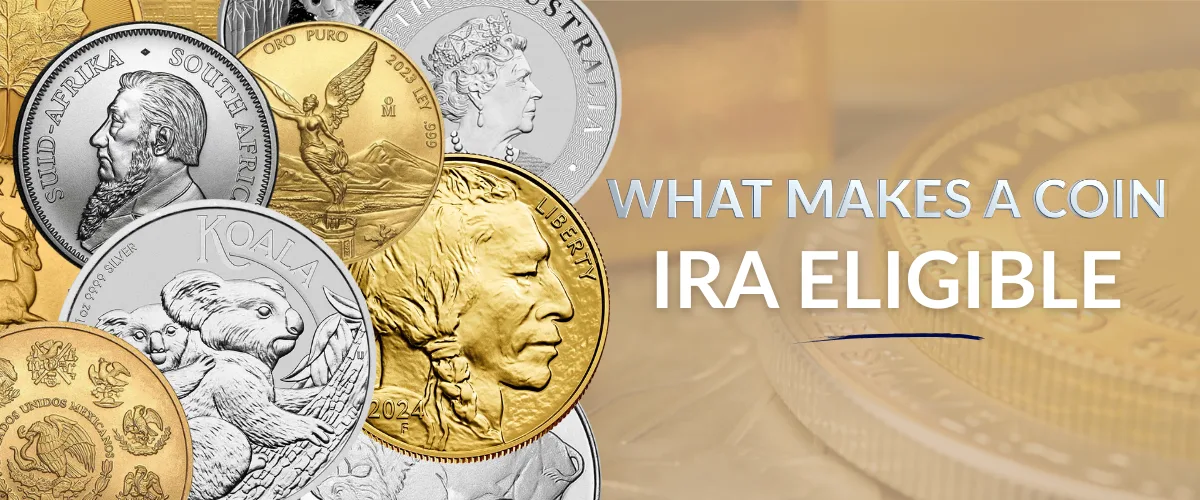
A Precious Metals IRA holds physical gold (≥.995 fineness), silver (≥.999), platinum and palladium (≥.9995). IRS-approved coins include American Eagle, Canadian Maple Leaf, Austrian Philharmonic, and Australian Kangaroo. Bars must come from LBMA/COMEX-accredited refiners such as PAMP Suisse and Valcambi. Numismatic coins and collectibles are excluded under the collectibles exception (IRC §408(m)(3)). The custodian verifies which physical metals qualify so you stay aligned with IRS regulations.
Costs, Fees, and Logistics
Compared with brokerage-based retirement accounts, a self-directed IRA that holds physical precious metals carries higher fees. Plan for setup fees to open the account ($50–$100 one-time), annual custodian fees ($75–$150, including IRS reporting via Form 5498), and storage fees at an IRS-approved depository such as Delaware Depository, Brink's Global Services, or IDS of Texas ($100–$150/year segregated). Delivery, insurance, and spot price vs. premium differentials add to total costs. Over a 10-year hold on a $50,000 account, total fees average $2,500–$4,000, or roughly 0.5–0.8% annually. Balancing fees against the diversification and tax-deferral benefits is a key step in your investment process.
Why Precious Metals in Retirement Accounts?
Precious metals diversify a retirement portfolio by holding a –0.10 to +0.15 correlation to the S&P 500 over the past 30 years (World Gold Council, 2024), making them a statistical diversifier during equity drawdowns. Gold has shown a 20-year annualized return of approximately 8.5% — gaining 5.5% in 2008 while the S&P 500 fell 37% — demonstrating its value as an inflation hedge during inflationary periods and economic uncertainty. When inflation rises or equity markets decline, physical precious metals typically move differently than stocks and bonds, potentially smoothing volatility inside a retirement portfolio.
The metals are tangible assets with global liquidity and a long history of value. While past performance never guarantees future results, most financial advisors recommend limiting precious metals to 5–15% of a total retirement portfolio. A balanced approach matters; even strong inflation-hedge candidates can experience price swings. Blending physical metals with traditional assets in line with your retirement goals and risk tolerance helps manage overall portfolio risk.
Choosing the Right Account Type
Traditional Gold IRAs
Traditional gold iras use pretax dollars and may allow a tax deduction for contributions subject to Internal Revenue Service rules. Growth is tax deferred, and distributions in retirement are taxed as ordinary income. Required minimum distributions apply under current IRS regulations. This structure is similar to other iras that hold traditional assets, but the investments are metals.
Roth Gold IRAs
Roth gold iras are funded with after tax dollars. Qualified withdrawals are tax free under Internal Revenue Service rules, which can be attractive if you expect to be in a higher tax bracket later. While you do not get an upfront deduction, the potential for tax free distributions appeals to many investors who want to hold gold and other precious metals for the long term. Roth contributions and conversions have contribution limits and eligibility rules, so confirm details before you add funds.
SEP Gold IRAs
SEP gold iras follow the rules of traditional sep iras but invest in physical metals. They are designed for self employed individuals and small businesses that want higher contribution limits than standard iras offer. The same tax advantages available to SEP plans apply; contributions may be deductible and grow tax deferred, while the account invests in approved precious metals under the self directed structure.

Contribution Limits, Rollovers, and Transfers
The 2026 IRS annual contribution limit is $7,000 ($8,000 if age 50+) for Traditional and Roth Gold IRAs; SEP Gold IRAs allow up to 25% of compensation or $69,000. In addition to annual contributions, you can fund a Gold IRA by moving assets from other retirement accounts. The custodian issues Form 5498 annually to report contributions and fair market value to the IRS; Form 1099-R is issued for any distributions.
- Direct rollover: Move money from a 401(k), 403(b), TSP, or 457 plan to a self-directed IRA tax-free. The 60-day rollover rule applies to indirect rollovers — if you receive the check, you have 60 days to redeposit the full amount or face income tax plus a 10% penalty if under 59½. Note the once-per-year rollover rule: you may only perform one indirect (60-day) rollover per 12-month period across all IRAs.
- Trustee-to-trustee transfer: Direct transfers between IRA custodians have no frequency limit and are not subject to the once-per-year rollover rule. This is the preferred method for moving funds between IRAs.
- Annual contributions: Add funds each year within IRS contribution limits using pretax or after-tax dollars depending on account type.
Careful handling of rollovers and transfers helps preserve tax advantages and avoids penalties. Work with your IRA trustee to execute the process properly and avoid prohibited transactions under IRC §4975.
Step-by-Step: How to Start a Gold IRA
1. Decide on Traditional, Roth, or SEP
Match the account type to your retirement goals and tax situation. Traditional gold iras fit if you want a potential deduction now and expect lower income taxes later. Roth gold iras may work if you prefer after tax dollars today for tax free qualified withdrawals in retirement. SEP gold iras can be effective for self employed individuals and small businesses seeking higher limits while holding precious metals. Each option has contribution limits and eligibility rules, so align the choice with your broader retirement plan.
2. Select a Specialized Custodian
Open a self directed ira with an ira trustee that supports metals. The custodian handles account administration, confirms that coins and bars are approved precious metals, and coordinates with the depository. This specialized custodian experience matters because the Internal Revenue Service requires strict compliance for holding physical gold and other precious metals inside retirement accounts.
3. Choose an IRS Approved Depository
The metals must be stored at an IRS approved depository with secure storage protocols. Facilities often use bank vaults, layered security, and insurance. You may choose segregated storage so your metals are stored separately, or select commingled options to manage costs. In all cases, the assets remain securely stored and titled to your ira account, not to you personally.
4. Open and Fund the IRA Account
Complete paperwork to open the ira account, then fund it. You can transfer funds from other iras, request a trustee-to-trustee transfer, initiate a direct rollover from a qualified plan, or make annual contributions within contribution limits. If you use after tax dollars in a roth structure, keep detailed records. If you contribute pretax dollars to a traditional structure, confirm how deductions apply. When done correctly, rollovers and transfers are typically tax free and preserve your tax advantages.
5. Select Metals and Place the Order
Work with the custodian and dealer to select physical gold, silver, and other approved precious metals that meet Internal Revenue Service criteria. Decide between bars and coins, confirm premiums, and lock pricing. The custodian pays the dealer from your ira. You never take personal possession because holding physical gold personally inside an ira violates IRS regulations. This step is central to the investment process: choose eligible metals, execute the purchase, and document everything.
6. Delivery, Verification, and Storage
After purchase, the dealer ships your metals directly to the IRS approved depository. The depository verifies weight and purity, adds them to your account under the custodian, and issues a receipt. With segregated storage, your items are stored separately and labeled to your ira account. With commingled storage, your holdings are pooled but tracked. Either way, the metals are securely stored with insurance and reporting in place.
7. Monitor, Rebalance, and Plan Distributions
Review your retirement portfolio periodically. Rebalance between metals and traditional assets based on market conditions, inflationary periods, and retirement goals. For traditional gold iras and sep gold iras, plan for required distributions under IRS regulations. For roth gold iras, qualified withdrawals are typically tax free. When it is time to take distributions, you can sell metals for cash inside the account or, if permitted, take in-kind distributions and pay applicable taxes for the account type.
Benefits and Drawbacks to Consider
Potential Benefits
- Diversification: Precious metals can reduce reliance on paper assets and traditional investments, helping you avoid putting all your eggs in one basket.
- Inflation hedge: Many investors view physical gold as a potential hedge during inflationary periods and economic uncertainty.
- Tangible assets: Holding physical metals can add a sense of security versus purely digital or paper holdings.
- Same tax advantages: Within an ira, metals enjoy the same tax advantages as other iras, including tax deferred or tax free growth depending on account type.
Possible Drawbacks
- Higher fees: Expect setup fees, storage fees, and custodial charges because physical storage and secure transport are required.
- Liquidity and timing: Selling metals takes coordination through your custodian and depository, which can be slower than selling mutual funds.
- Compliance risk: Holding precious metals at home inside an ira can violate IRS regulations, so follow the rules strictly.

Compliance, Rules, and Best Practices
The IRS requires .995 fineness for gold, prohibits home storage (McNulty v. Commissioner, 2021), and taxes prohibited transactions as full distributions. Key compliance rules under IRC §408(m) and §4975:
- Home storage prohibited: Storing Gold IRA metals at home or in personal vaults is treated as a distribution, triggering income tax plus a 10% penalty if under age 59½. The Tax Court confirmed this in McNulty v. Commissioner (157 T.C. No. 10, 2021). So-called "Checkbook IRA" LLC home storage schemes carry the same risk.
- Prohibited transactions (IRC §408(m)): Transactions between an IRA and a disqualified person (owner, spouse, lineal descendants, fiduciaries) are prohibited. Self-dealing — using IRA assets for personal benefit — triggers full distribution treatment.
- Fineness standards: Gold ≥.995, silver ≥.999, platinum and palladium ≥.9995. Bars must come from LBMA/COMEX-accredited refiners. Numismatic and collectible coins are excluded.
- RMD at age 73: Traditional Gold IRAs and SEP Gold IRAs require Required Minimum Distributions starting at age 73 (SECURE 2.0 Act). RMDs can be satisfied by selling metals for cash (standard distribution, Form 1099-R) or by taking an in-kind distribution of physical metal (valued at spot price on distribution date).
- IRS-approved depositories: Delaware Depository (Wilmington, DE), Brink's Global Services, IDS of Texas (Dallas), and HSBC Bank USA are among the approved storage facilities.
Work with a licensed IRA custodian and financial advisor to maintain compliance. Following these best practices protects your tax advantages and keeps your self-directed retirement account in good standing.
Gold IRA vs Gold ETF: Key Differences Explained
Many investors compare a gold IRA to a gold ETF (exchange-traded fund). Both offer gold exposure, but they differ significantly in structure, costs, tax treatment, and ownership:
| Feature | Gold IRA | Gold ETF (e.g., GLD, IAU) |
|---|---|---|
| Ownership | Physical gold bars/coins | Shares tracking gold price |
| Tax treatment | Tax-deferred (Traditional) or tax-free (Roth) | Taxed at collectibles rate (28%) or capital gains |
| Annual fees | $225–$450 (storage + admin) | 0.25–0.40% expense ratio |
| Liquidity | Days (via custodian) | Instant (stock exchange) |
| IRA eligible | Yes (self-directed IRA required) | Yes (standard brokerage IRA, e.g., Fidelity) |
| Counterparty risk | None (you own the physical metal) | Yes (fund manager and custodian risk) |
Bottom line: A gold IRA gives direct ownership of physical gold with powerful tax advantages but higher fees and lower liquidity. A gold ETF is cheaper to hold and more liquid but does not give you physical metal. Many investors hold both: ETFs for tactical exposure and a gold IRA for long-term retirement diversification and inflation protection.
Comparing a Gold IRA to Buying Metals Outside an IRA
Buying gold and silver in a taxable account offers flexibility but lacks the tax benefit of an individual retirement account. In a gold ira, gains can be tax deferred in traditional structures or potentially tax free in a roth structure. The trade-off is that the IRS requires physical storage at an approved depository, which adds storage fees and higher fees overall. Outside an ira, you control storage decisions, but gains are taxable annually or upon sale, and you lose the retirement accounts tax advantages. Many investors use both approaches: hold gold silver bullion personally for flexibility and maintain a separate ira for long-term retirement savings with formal oversight.
Who Might Consider Starting a Gold IRA?
Investors concerned about inflationary periods, long-term economic downturns, or economic instability may want a portion of retirement savings in metals. Those with significant exposure to paper assets or traditional investments may use a precious metals ira to diversify. Self employed individuals and small businesses that want to fund retirement accounts with a sep structure can use sep gold iras to combine higher contributions with physical gold. As with any strategy, align allocation with risk tolerance, time horizon, and retirement goals, and avoid concentrating too heavily in one asset class.
Common Mistakes to Avoid
- Home storage: Holding physical gold for your ira at home is prohibited. Use an IRS approved depository.
- Ineligible products: Some collectible coins are not allowed. Stick to approved precious metals and other approved precious metals that meet purity standards.
- Ignoring costs: Underestimate storage fees, setup fees, and transaction charges and your net returns may suffer.
- All your eggs in one basket: Over-allocating to metals can reduce diversification benefits. Blend with traditional assets.
- DIY compliance: Working without a specialized custodian or financial advisor increases the risk of violating IRS regulations.

🏆 Special Offer from Augusta Precious Metals
Augusta Precious Metals is America's #1 rated Gold IRA company. Get your Visit Website today — no obligation, ships within 24-48 hours.
Get Free Kit →✓ No obligation ✓ 100% Free ✓ Ships in 24-48h
How to Get Started in 4 Steps
Research Companies
Compare Gold IRA companies above to find the best fit for your goals.
Open Your Account
Complete the application with a self-directed IRA custodian.
Fund Your IRA
Rollover from 401(k) or transfer from an existing IRA.
Select Metals
Choose IRS-approved gold, silver, or other precious metals.
 Our Editorial Team